

The Silo Problem: Why Science is the Bridge, Not the Island
Do you remember that feeling when you first walked into your classroom this year? The mix of excitement and that low-level hum of anxiety about the new standards, the testing calendar, and the persistent whisper that our students are "falling behind"? This is seen as a "normal experience" for teachers, everywhere but we can break the status quo!
We’ve all seen the headlines. The latest NAEP (National Assessment of Educational Progress) data hit the wire like a cold splash of water: a four-point drop in eighth-grade science scores. It’s the lowest we’ve seen in over a decade. Nearly 38% of our eighth graders are performing below the "Basic" level.
It’s easy to look at those numbers and feel a sense of defeat. It’s even easier to point fingers at the "learning loss" from the pandemic or the lack of resources. But if we’re being honest with each other: colleague to colleague: the problem goes deeper than a single test or a single year.
The real problem is the silo.
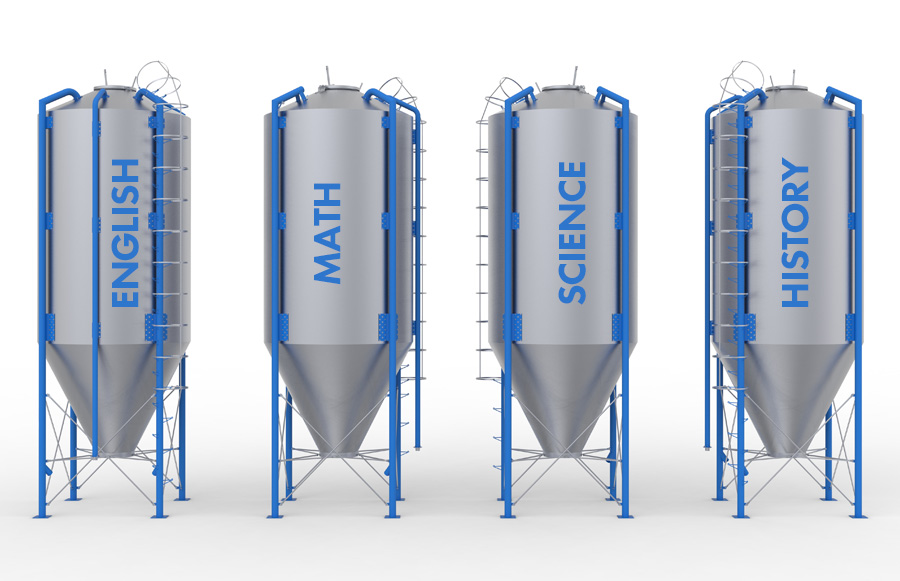
Image source: (Dr. Crowder, Educational Vistas, Inc.)
For decades, we’ve treated science like a beautiful, isolated island. We’ve carved out "science time" or "science blocks" as if the skills needed to understand the world are somehow separate from the skills needed to read a book or solve a math problem. We’ve built walls around our subjects, and in doing so, we’ve made science feel like an elective rather than the essential foundation of literacy.
But what if we changed the narrative? What if science wasn't an island, but the bridge?
The Crisis is a Literacy Crisis in Disguise
When we talk about the "scientific literacy crisis," we often focus on the scientific part: the facts, the formulas, the periodic table. We default our thinking here as it is what is the most familiar to us and directly impacts our classes. But the crisis is just as much about the literacy.
Think about the last time you handed a complex scientific article to your students. Did they struggle with the chemical bonds, or did they struggle to navigate the text itself? When they looked at a graph, did they lack the "science knowledge," or did they lack the confidence to analyze data and translate it into a written argument?
The NAEP data shows a direct correlation between the decline in scores and a decline in student-reported hands-on inquiry. We’re doing less "science" and more "reading about science" from dry, disconnected sources. Ironically, by trying to save time for "core" literacy and math, we’ve stripped science of the very context that makes those skills meaningful.

Science: The Ultimate Context for Learning
Science is the only subject that requires a student to be a reader, a writer, a mathematician, and a historian all at once.
When a student investigates why a local pond is experiencing an algal bloom, they aren't just doing "life science." They are:
- Reading complex technical texts and phenomenon-based articles to understand the nitrogen cycle.
- Writing evidence-based claims and persuasive arguments to propose a solution to the local council.
- Analyzing data sets and graphs to identify trends over time.
This isn't "extra" work. This is the work.
Science provides the reason for literacy. It turns "reading for the sake of reading" into "reading to solve a mystery." It turns "writing for a grade" into "writing to share a discovery." When we break down the silos, we don't just improve science scores; we build a more capable, curious, and literate human being.
Making the Shift: From Silos to Stations
We know what you’re thinking. “I barely have time to get through my curriculum as it is. How am I supposed to teach reading and writing on top of my labs?”
That is exactly why we built Sciesmic. We didn't want to give you "one more thing to do." We wanted to give you a tool that amplifies what you’re already doing.
Our Middle School Science Library and High School Science Libraries are designed specifically to dismantle these silos without adding to your prep time. We’ve built the "bridge" directly into the resources.
1. The Power of "Read, Write, Analyze" Lab Stations
We’ve structured our science labs around the idea of integrated literacy. Our lab stations aren't just about mixing chemicals; they are about processing information.
- The "Read" Station: Students engage with real-world, phenomena-based articles that provide the "why" behind the lab. These aren't textbook snippets; they are engaging narratives that demand active reading.
- The "Write" Station: Instead of filling in a single-word blank, students are prompted to draft claims, provide evidence, and explain their reasoning (CER). This is where TEKS science and NGSS science curriculum standards come to life through student voice.
- The "Analyze" Station: Data isn't just a table of numbers. Students learn to see the story behind the data, using tables, graphs, and classroom measurement tools to collect and visualize information.

Why This Matters for Equity
Let’s talk about the achievement gap. The NAEP data revealed that our lowest-performing students are the ones being hit the hardest by this crisis. When we silo science, we often reserve the "fun," inquiry-based labs for the advanced classes, while the students who are struggling with literacy get stuck with "simpler" worksheets.
This is a mistake.
Inquiry-based science is the great equalizer. For a student who struggles with traditional reading, a hands-on lab provides the visual and tactile context they need to understand a text. When they see the phenomenon with their own eyes, the words on the page finally start to make sense. By integrating literacy into science labs, we give every student: regardless of their starting point: a seat at the table.

Turning the Tide Together
The 4-point drop in NAEP scores doesn't have to be a prophecy of failure. It can be a wake-up call. It’s an invitation to stop doing science the way it’s always been done and start doing it the way students actually learn.
We aren't just teaching kids about atoms or ecosystems. We are teaching them how to survive and thrive in a world overflowing with information. We are teaching them to be the critical thinkers, the problem solvers, and the literate citizens our future demands.
You don’t have to build this bridge alone. Whether you’re looking for district-wide solutions or a way to refresh your own classroom, we’re here to partner with you. Our libraries are packed with classroom-tested, standards-aligned resources that make integrated learning the path of least resistance.
Are you ready to stop teaching science on an island?
Join our risk-free Pilot Program today and see how your students respond when the silos come down. Let’s turn that 4-point drop into a revolution of engagement.
The bridge is already built. We’re just waiting for you to cross it.