

The "C.E.L.L." Format Anchor Any Science Unit or Scientific Phenomena
Looking to elevate your content and anchor a unit with ease? The "C.E.L.L." Format is a powerful no-prep way to engage your students on any scientific phenomena!

The Challenge Every Science Teacher Faces
Imagine it's the night before a new unit starts. You know the content inside and out, but you're stuck on one critical question: How do you hook students' attention on day one while setting up the entire unit for success? You need something that activates prior knowledge, surfaces misconceptions, generates authentic questions, and gets students genuinely curious...all without feeling like a traditional lecture or notes session.
We faced this exact challenge. Standing in front of students on day one of a new unit, we needed a structure that would engage them immediately while giving us insight into their thinking. All without requiring extensive prep or custom materials for every single unit. How can you do this while keeping everything standards-aligned, targeted to an interesting and relatable phenomenon, but broad enough to be used on the first day?
Thankfully, we had a friend in the nearby English department. They suggested we use a graphic organizer like the four-square notes. With some modifications and several years of trial and error, the C.E.L.L. format was developed! With it, student engagement soared and these phenomena were easier to teach and anchor.
What is it?

[Grab the FREE Template Now]
The C.E.L.L. format is based on the four-square notes used in many ELA/RLA and History classes. In those situations, students are utilizing them for notes or in response to a particular reading passage. However, by modifying this approach slightly for science classes, it quickly becomes useful for students of all backgrounds.
When do I use it?
You can easily utilize the C.E.L.L. format at the start of a new unit or topic. This also works well when exposing students to a new phenomenon to help anchor and increase student engagement early on.
How do I use it?
The C.E.L.L. format can easily fit into nearly every exploration of scientific phenomenon. Simply provide your students with the four tiles to complete either during or immediately after your anchoring or scientific phenomena. The space and questions allow students to easily collect their thoughts. This ultimately helps with how they process the information or experience!
How long does it take?
The C.E.L.L. format typically takes 15-25 minutes to complete:
- 3-5 minutes: Experience the phenomenon (video, demo, reading)
- 10-15 minutes: Complete C.E.L.L. squares (individual or group roles)
- 5-10 minutes: Share and discuss as a class
This makes it perfect for a single class period while leaving time for initial discussion and questions that will drive your unit.
Option 1: Individual students

Each student completes all of the sections on their own during/after a phenomenon. Students can then discuss with a partner/group and share what they experienced and how it connects to their learning. As the teacher, you are walking around facilitating and looking for misconceptions to clarify later or as a class.
Option 2: Assigned group roles
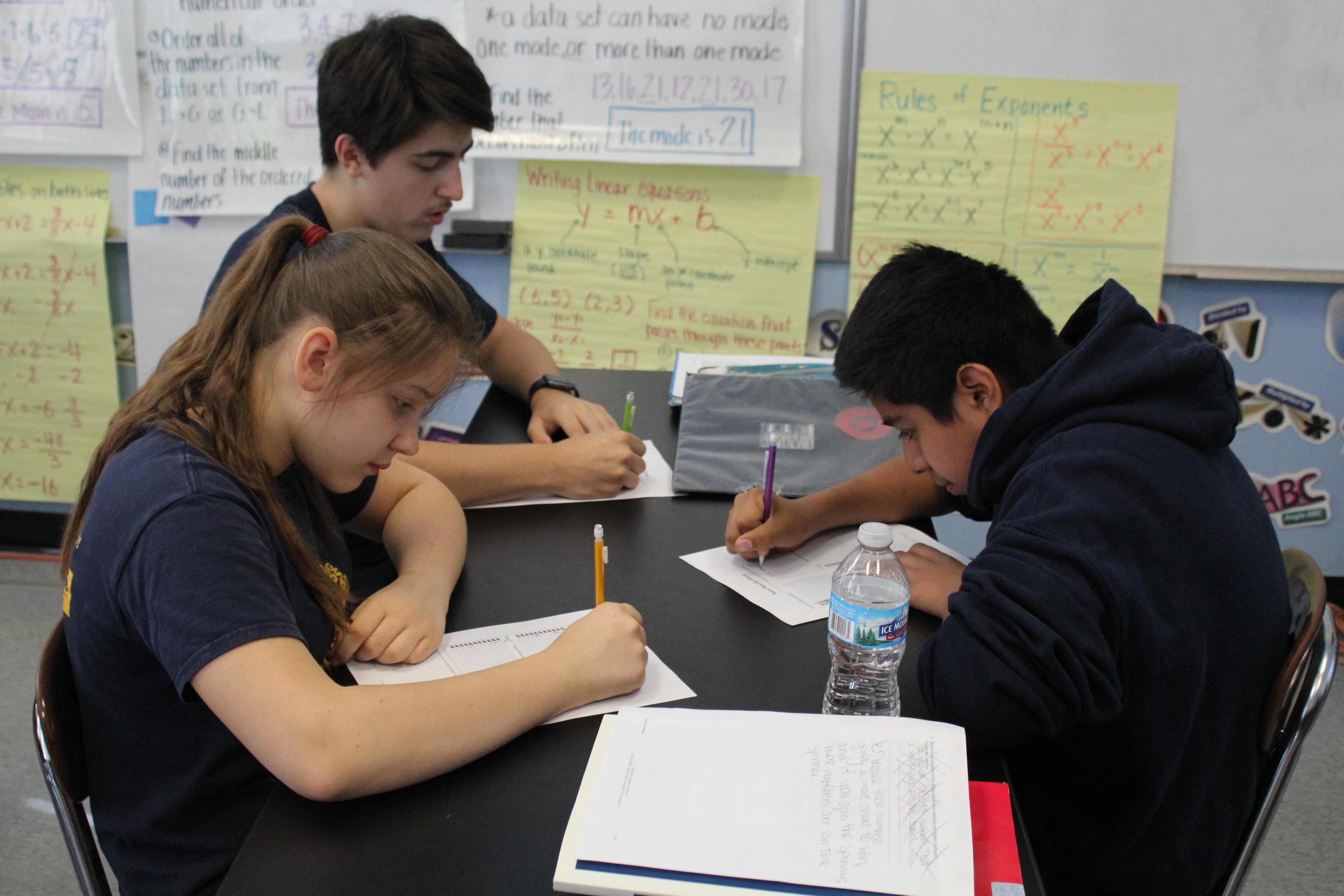
The teacher assigns each student in a small group a section to complete. This eases the workload of each students. Students can then come together with their table groups to discuss and share what they experienced and how it connects to their learning. As the teacher, you are walking around facilitating and looking for misconceptions to clarify later.
C - Content Connections
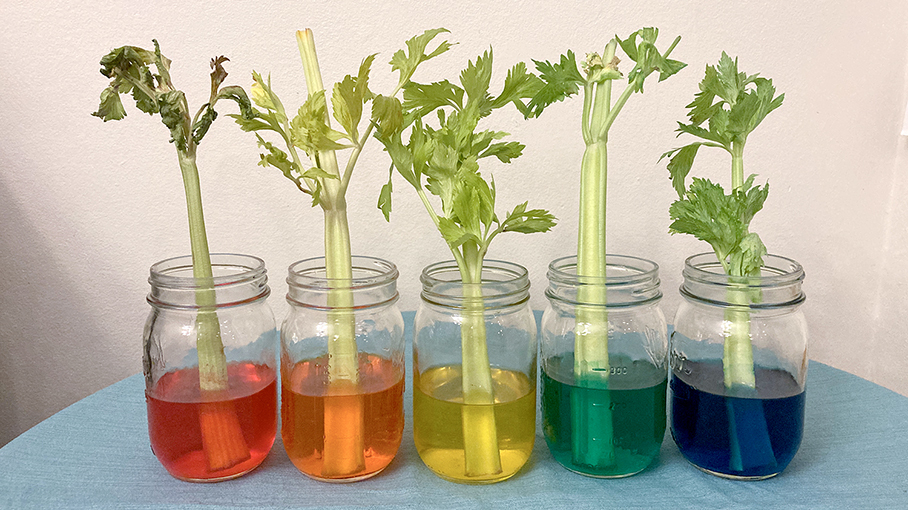
This section tasks students with jotting down how they believe the phenomenon connects to their prior knowledge. By doing so, they are able to seek out connections to not just previous lessons but also their own lives and experiences.
Examples:
- The celery changing colors must have been from the food coloring in the water. So maybe this is related to how we learned plants take up water with their roots!
- This reaction was like when we mixed Mentos and Diet Coke together - boom!
- Cells multiplying is a lot like how people divide and spread out.
- The hurricane is a lot like the one my cousins went through in Florida.
E - Essential Ideas

Next students pull from previous knowledge of vocabulary and terms that they feel are relevant. Not every student will have the correct terms or definitions - this is okay! You will have plenty of time to correct misunderstandings later in your unit or as a class.
Students will also write down why they believe this particular phenomenon is important. This could be a level of importance from global to microscopic. They will attempt to identify the importance of this to science as a whole. Again, it is okay if it isn't correct. The emphasis should be on taking an educated guess and learning as the discussion/unit progresses whether they were correct or not.
Examples:
- Volcanic Eruptions create new land for plants and animals.
- The car crumpling when crashing helps keep the people inside of it safe.
Teacher Tip: Don't worry if students use informal language or approximate vocabulary here. Hearing 'the stuff that makes plants green' instead of 'chlorophyll' tells you exactly what students know and gives you a starting point for building precise scientific terminology throughout your unit.
L - Learning Outcomes

Within this section, students jot down any questions that they may have after experiencing the scientific phenomenon. This allows them to collect their burning questions and makes discussions easier too. As a teacher, this helps you identify new ideas to discuss, areas for engagement, or where there might be potential gaps in student understanding.
Examples:
- If we change the height of the roller coaster, does that change how fast it goes?
- What if we tried looking at this under a microscope to see if we can see any changes?
Why this matters: These student-generated questions become your unit roadmap. Post them on an 'anchor chart' and revisit them throughout the unit, checking off questions as they're answered. This shows students their learning journey and validates their curiosity.
L - Looks Like...
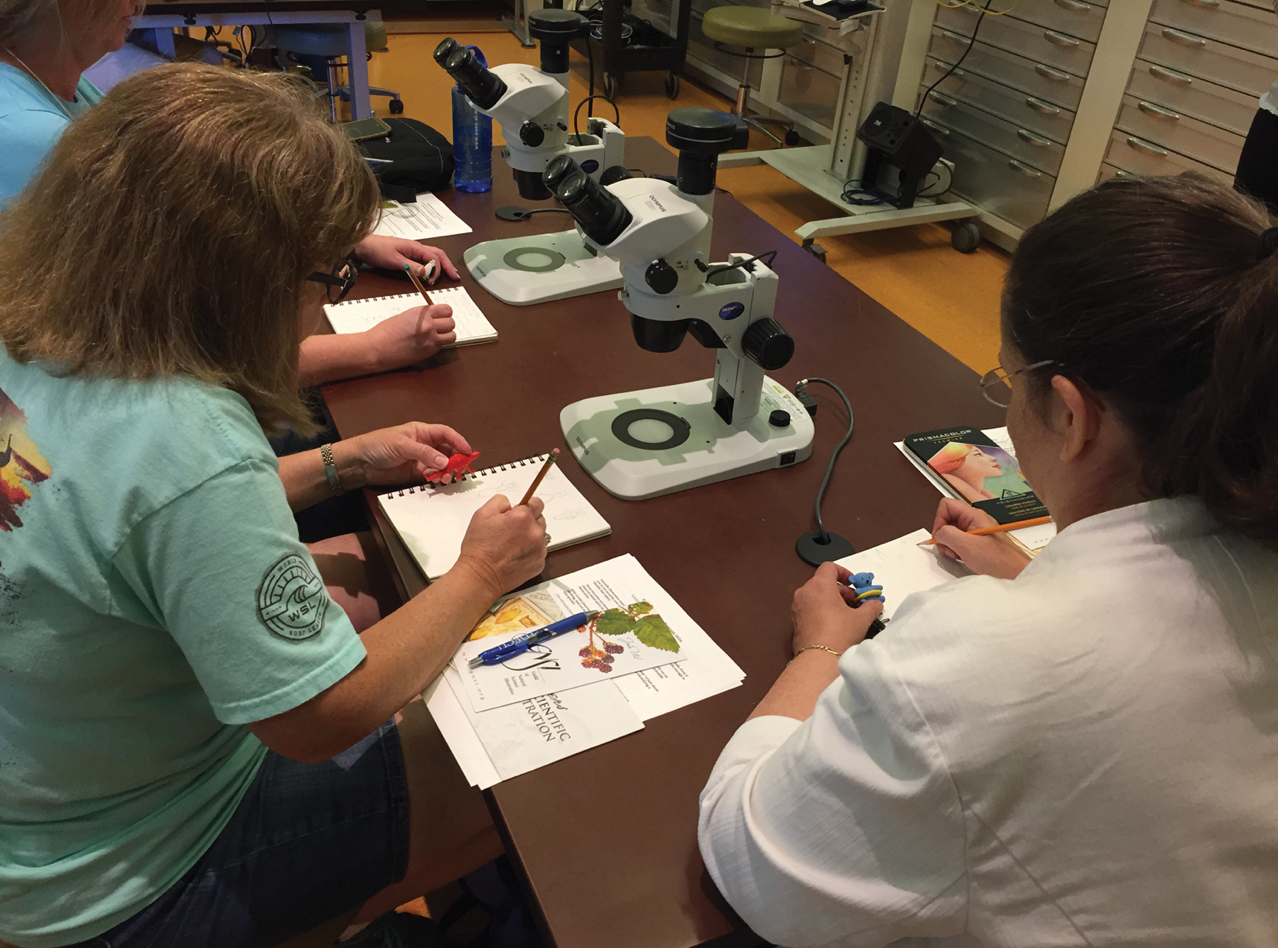
In the final section of the C.E.L.L. squares, students focus on what they personally observed. This allows them to process what it is that they saw without worrying about what comes next. All of their senses can be used, trends can be noticed, or something as simple as a physical or chemical change may be observed. These observations are important as they allow you, as the educator, to see what a student was able to observe.
Examples:
- When they mixed the chemicals the color changed and some smoke or gas came out of the top.
- I observed that when they brought back the wolfs the number of deer went down.
Common Pitfalls to Avoid 🚫
Even with a strong structure, implementation matters. Here are some common mistakes to avoid:
- Don't rush through sections: Students need 2-3 minutes minimum per quadrant to think deeply
- Don't correct in the moment: Let misconceptions exist on paper—you'll address them throughout the unit
- Don't skip the sharing: The magic happens when students hear each other's observations and questions
- Don't grade this: C.E.L.L. is formative assessment and brainstorming, not a quiz
[Grab the FREE Template Now]
In conclusion
The C.E.L.L. format works because it mirrors how learning actually happens: we connect new information to existing knowledge (C), activate relevant vocabulary (E), generate authentic questions (L), and ground everything in concrete observations (L). By externalizing this natural process, students become metacognitive about their own learning while you gain unprecedented insight into their thinking!
As you can see, each of these cells is designed intentionally with student understanding in mind. Each section allows students to process different aspects of the same phenomena and prepare for what is to come. These can be used any time a phenomena is introduced or you can use one of our many phenomenal anchor activities to start every unit off right.
![]() ⚓ Try Our Phenomenal Anchors!
⚓ Try Our Phenomenal Anchors!

These ready-to-use activities allow you to easily kick off a new content area, spark questions, and engage your students! Easily hook students from the first day of a new unit. Students work individually to complete the C.E.L.L. squares, collaborate to answer group questions, and discuss as a class the phenomena everyone experienced together.
Each Phenomenal Anchors Activity comes with:
- An expertly curated phenomenon (such as a Video, Reading, Demo, etc.)
- Digital Google Slides and Printable PDF Versions.
- Questions designed to ensure student understanding.
- Teacher Instructions - Easily facilitate and check for understanding!
Want to explore more resources such as the anchoring phenomena or lab station activities?
All of these resources are included in our science memberships. Explore everything we have to offer FREE for 30-days! This includes all of our standards-aligned middle and high school resources.
Claim your free trial now!

