

Hispanic Heritage Month: 10 Scientists Your Students Should Know
What changes when a student sees someone who shares their heritage, or their language, community, or life experience, doing work that once felt out of reach?
Often, the future gets a little bigger.
Hispanic Heritage Month, celebrated from September 15 through October 15, is a meaningful opportunity to recognize the scientists, engineers, astronauts, and leaders whose work has changed how we understand the human body, our planet, and the universe.
Representation matters. But so does relevance.
These scientists give you ready-made connections to topics you already teach: ozone chemistry, nervous system structure, engineering design, data analysis, forces and motion, planetary science, and more. The quick lesson ideas below are designed for grades 6–12 and connect naturally to NGSS Science and Engineering Practices and TEKS science process skills.
The list includes scientists from Spanish and Latin American backgrounds. As you introduce them, invite students to think about how identity, place, persistence, and community can shape a scientific journey.
1. Santiago Ramón y Cajal (Neuroscience)

A Spanish physician and histologist, Santiago Ramón y Cajal is often called the father of modern neuroscience. His detailed drawings of nervous tissue helped establish the neuron doctrine: the idea that the nervous system is made of individual cells rather than one continuous network.
He shared the 1906 Nobel Prize in Physiology or Medicine for his work on the structure of the nervous system. His illustrations remain striking examples of how observation and scientific communication work together.
Classroom hook: Show students one of Cajal’s neuron drawings without identifying it. Ask them to make observations, develop a claim about structure and function, and support it with evidence. This connects to HS-LS1-2, structure and function, along with the NGSS practice of analyzing and interpreting data.
Learn more from the Nobel Prize biography of Santiago Ramón y Cajal.
2. Mario Molina (Atmospheric Chemistry)
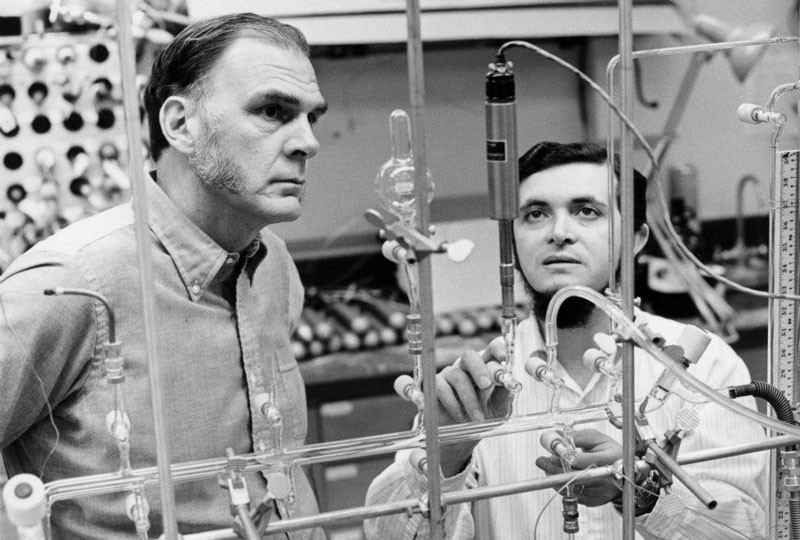
Mario Molina (right) and his supervisor (and fellow Nobel prizewinner) F. Sherwood Rowland in 1974.Credit: UCI
Mexican chemist Mario Molina shared the 1995 Nobel Prize in Chemistry for his work on atmospheric chemistry. His research showed how chlorofluorocarbons, or CFCs, could reach the stratosphere, break apart under ultraviolet radiation, and release chlorine atoms that destroy ozone.
His work helped explain the formation of the Antarctic ozone hole and contributed to international action through the Montreal Protocol.
Classroom hook: Use a simple card sort: CFC released → travels upward → UV radiation breaks the molecule apart → chlorine reacts with ozone. Students can then write a short CER response explaining how one human-made chemical can cause a global environmental effect. This supports HS-ESS3-4 and chemistry process skills involving models, evidence, and cause-and-effect relationships.
Explore the official Nobel Prize facts about Mario Molina.
3. Ellen Ochoa (Optical Engineering & Space Exploration)

Image source: NASA.
Ellen Ochoa became the first Hispanic woman to travel into space when she flew aboard Space Shuttle Discovery in 1993. An engineer and former astronaut, she completed four space missions and later became the first Latina and second woman to lead NASA’s Johnson Space Center.
Before becoming an astronaut, Ochoa developed patented technologies related to optical information processing.
Classroom hook: Ask students to design a system for collecting and transmitting scientific images from space. Give them constraints such as limited energy, limited storage, and a need for clear data. Students can explain their design choices in a brief engineering notebook entry, connecting to MS-ETS1 or HS-ETS1 and the practice of designing solutions.
Read more in NASA’s profile of Ellen Ochoa.
4. Enectalí Figueroa-Feliciano (Experimental Physics)
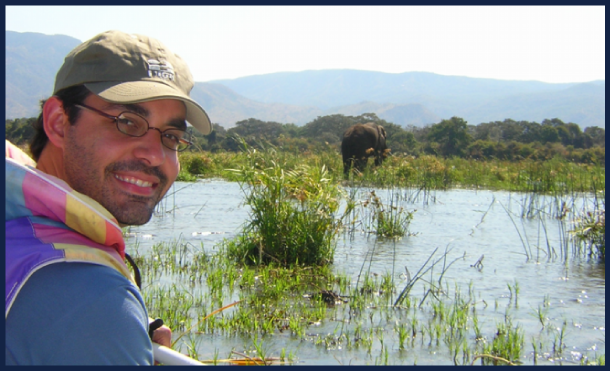
Image source: MIT Experimental Cosmology and Astrophysics Laboratory.
Puerto Rican physicist Enectalí “Tali” Figueroa-Feliciano develops extremely sensitive detectors for studying X-rays, supernova remnants, and possible dark matter signals. His work includes transition-edge sensors and cryogenic detectors that operate at temperatures near absolute zero.
In other words, he builds instruments that can detect incredibly small amounts of energy from some of the most distant and mysterious objects in the universe.
Classroom hook: Give students a simplified data set containing a weak signal mixed with background noise. Ask them to identify patterns, calculate an average, and explain what additional data would make the conclusion more reliable. This supports HS-PS4, data analysis, and the NGSS practice of using mathematics and computational thinking.
Visit Northwestern University’s profile of Enectalí Figueroa-Feliciano.
5. Paula Ortiz Couder (Aerospace Safety Engineering)
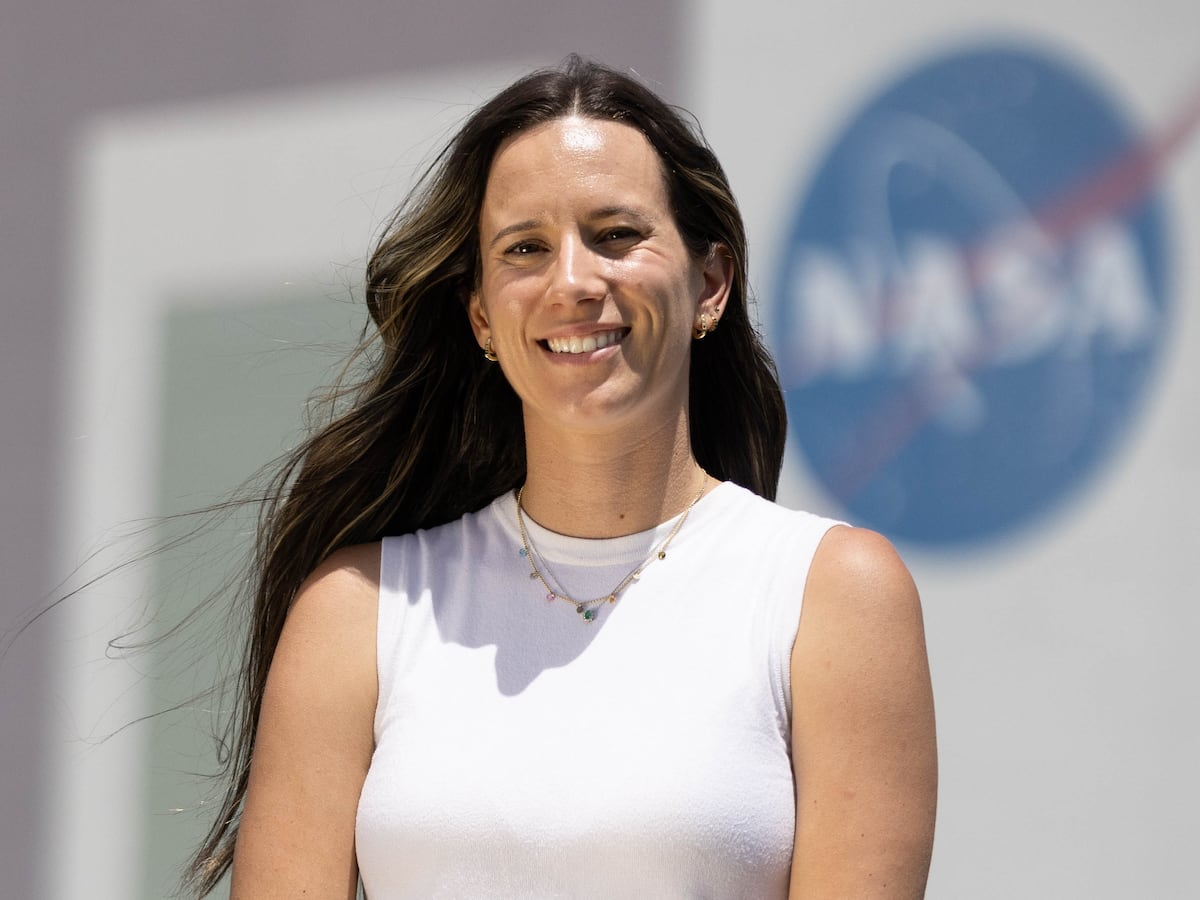 Image source: El País interview coverage of Paula Ortiz Couder’s NASA Artemis safety work.
Spanish aerospace engineer Paula Ortiz Couder works in safety and mission assurance at NASA’s Kennedy Space Center. Her work supports the Artemis lunar missions, including emergency evacuation systems designed to move astronauts away from danger during a launch emergency.
Her work is a valuable reminder that space exploration depends on much more than rockets and astronauts. It also requires careful planning, risk analysis, testing, and systems engineering.
Classroom hook: Present students with a launch-pad safety scenario. Ask them to identify possible hazards, define design constraints, and sketch an evacuation system. Have them explain which feature of their design reduces the greatest risk. This connects directly to MS-ETS1 or HS-ETS1 and the engineering practice of defining problems and optimizing solutions.
Read more about Paula Ortiz Couder’s Artemis safety work.
6. Edgard Rivera-Valentín (Planetary Science and Planetary Defense)
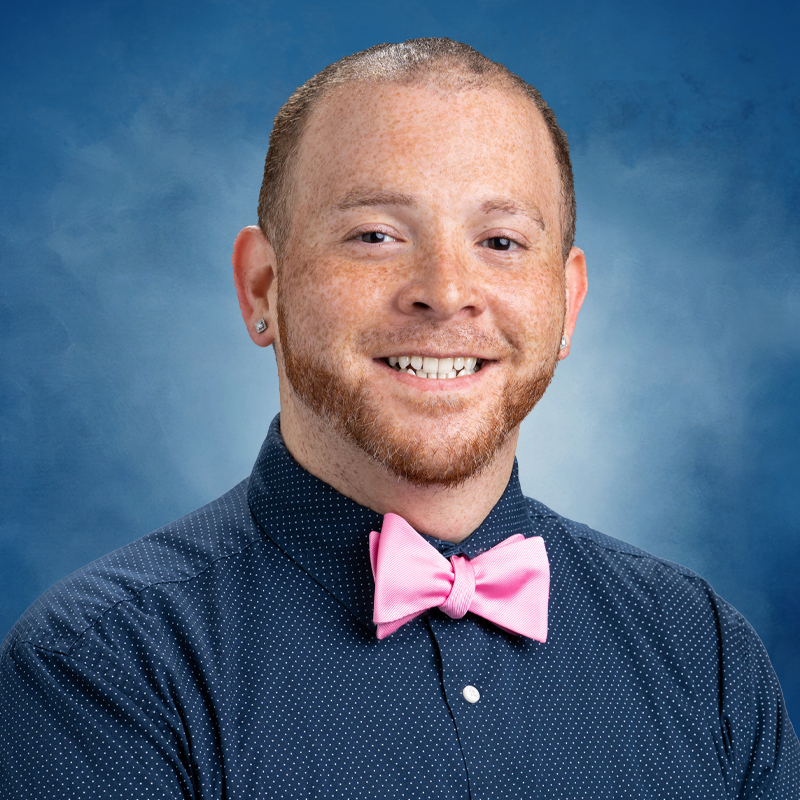
Image source: Johns Hopkins Applied Physics Laboratory.
Puerto Rican planetary scientist Edgard Rivera-Valentín studies planetary surfaces, habitability, and near-Earth objects. Their work with radar observations contributes to planetary defense efforts, including missions designed to find and characterize potentially hazardous asteroids.
Rivera-Valentín’s career also provides an important connection to Puerto Rico’s Arecibo Observatory and to the many ways scientists use data to understand worlds beyond Earth.
Classroom hook: Give students a small table of asteroid distance, speed, and observation data. Ask them to graph the information and determine which additional measurements scientists would need before assessing risk. This supports MS-ESS1, HS-ESS1, and the practices of analyzing data and communicating information.
Explore Edgard Rivera-Valentín’s profile from Johns Hopkins Applied Physics Laboratory.
7. France A. Córdova (Astrophysics and Science Leadership)
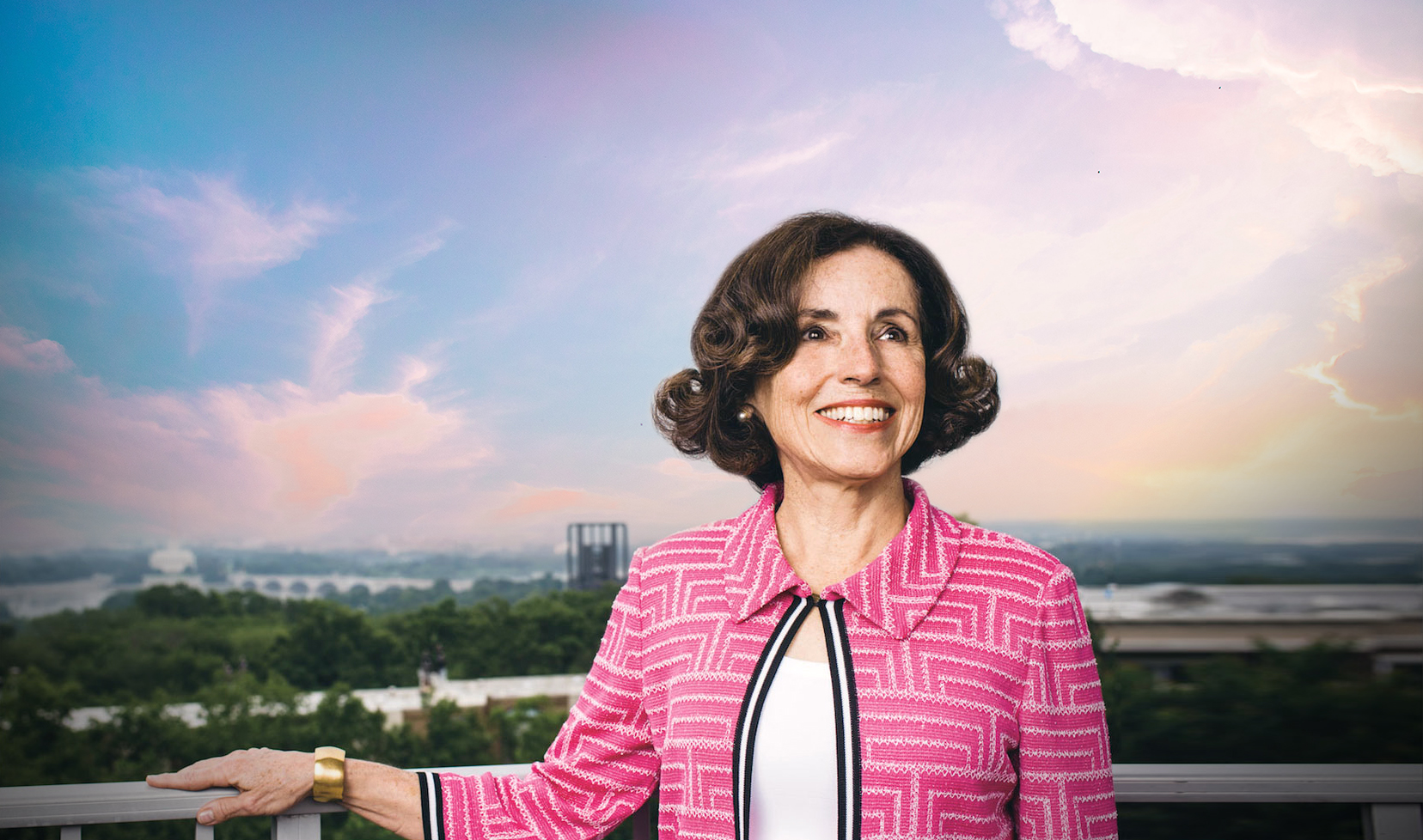
Secrets of the Universe, Dr. France Cordova – a “MY HERO” Story
Astrophysicist France A. Córdova, who is of Mexican and Irish heritage, became the first woman and first Latina to serve as NASA’s chief scientist. She later became the 14th director of the National Science Foundation.
Her research focused on high-energy astrophysics, including X-ray and gamma-ray sources. Her leadership also shows students that science careers can include research, teaching, public service, and shaping national priorities.
Classroom hook: Provide students with images or descriptions of the same astronomical object observed at different wavelengths. Ask them what each type of data reveals and why scientists use multiple tools. This connects to HS-PS4, HS-ESS1, and the practice of using multiple sources of evidence.
Read more from the National Academy of Sciences profile of France A. Córdova.
8. Adriana Ocampo (Planetary Geology)
 Image source: NASA Science. Photo credit: NASA/Aubrey Gemignani
Colombian-Argentine-American planetary geologist Adriana Ocampo helped identify the Chicxulub impact crater beneath Mexico’s Yucatán Peninsula. The crater is associated with the asteroid impact that contributed to the mass extinction at the end of the Cretaceous Period.
Ocampo has also held leadership roles in major NASA missions, including New Horizons and Juno.
Classroom hook: Create a CER prompt: Was a large asteroid impact the most likely cause of the end-Cretaceous extinction? Students can evaluate evidence such as crater structures, rock layers, iridium concentrations, and fossil records. This works well with MS-ESS1, HS-ESS1, and evidence-based argumentation.
Learn more from NASA’s profile of Adriana Ocampo.
9. Diana Trujillo (Aerospace Engineering and Robotics)
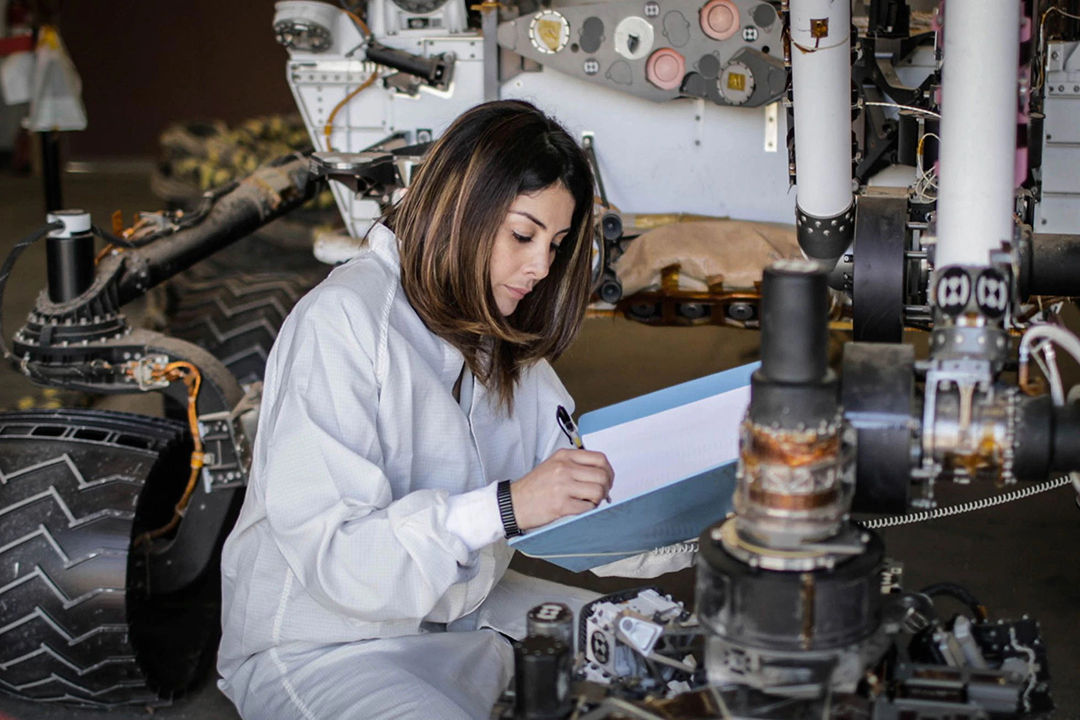
Image Source: From Cali to Mars, Feed Jerónimo Martins World Magazine
Colombian-American aerospace engineer Diana Trujillo leads engineering work connected to the Mars Perseverance rover’s robotic arm. The arm helps collect and analyze Martian rock and soil samples as scientists investigate the planet’s past habitability.
Trujillo also hosted NASA’s first Spanish-language live broadcast of a planetary landing, expanding access to space exploration for Spanish-speaking audiences.
Classroom hook: Give student teams craft materials and a simple task: design a robotic arm that can pick up and move an object without touching it directly. Students can test, revise, and explain how force, motion, and structure affected performance. This supports MS-ETS1, HS-ETS1, and the practice of planning and carrying out investigations.
See NASA’s “From Colombia to Mars” profile of Diana Trujillo.
10. José Hernández (Engineering, Medical Imaging, and Spaceflight)

Image source: NASA. Photo credit: NASA/Jim Grossmann.
José Hernández is a Mexican-American engineer and former NASA astronaut who grew up in a migrant farmworker family. Before flying aboard Space Shuttle Discovery in 2009, he helped develop an early full-field digital mammography system for detecting breast cancer.
His story connects engineering, medical technology, persistence, and space exploration, and gives students a powerful example of how science can serve people in many different ways.
Classroom hook: Show students a simplified pixel grid with two versions of the same image: one with low contrast and one with enhanced contrast. Ask them which version provides more useful information and why. This creates a practical connection to image processing, electromagnetic radiation, data representation, and medical technology.
Read more about astronaut José Hernández from NASA.
A Simple Hispanic Heritage Month Classroom Celebration
Image source: New Jersey Education Association
You do not need a month-long new unit to make this meaningful.
Try a Scientist-of-the-Day routine:
- Feature one scientist during the first five minutes of class.
- Display a photograph, quote, question, or piece of data connected to their work.
Ask students to identify the science concept behind the contribution.
Invite students to add the scientist’s field and country or community connection to a class map.
- End the month with student-created posters titled “Science Is Bigger When We See Ourselves in It.”
- You might also invite students to research Latine scientists, engineers, physicians, or science professionals in your own community. Who is doing important scientific work nearby? What problems are they helping solve?
- That question can turn representation from a one-month observance into an ongoing classroom habit.
The best celebrations do not interrupt science instruction. They deepen it.
If you need ready-to-use investigations, phenomena articles, lab stations, or assessments to support these connections, explore Sciesmic’s sample content or the Middle School Science Library. Sciesmic resources are built by educators, aligned to NGSS and TEKS, and designed to work alongside your expertise: not replace it.
This Hispanic Heritage Month, choose one scientist, one story, and one science idea to bring into your classroom. Then invite your students to imagine what they might discover next!
